 Jury
Jury
In brief. Fair oral assessment needs observable criteria, a scale students understand before presenting, and a useful record afterwards. A rubric does not replace professional judgement: it makes that judgement explicit, easier to compare and easier to explain to the student.
Choose a few observable criteria
Separate content, structure, delivery and interaction. For each criterion, describe something you can observe: a supported argument, a clear structure, an audible voice or a precise answer to a question. Avoid vague descriptions such as “good presence” without saying what they mean in practice.
Choose a consistent assessment scale
Three or four descriptive levels are often enough. Write the expected performance descriptors first, then assign points if a numerical grade is required. This approach helps reduce differences between assessors and makes it easier to review a decision after several presentations.
Take notes without losing sight of the student
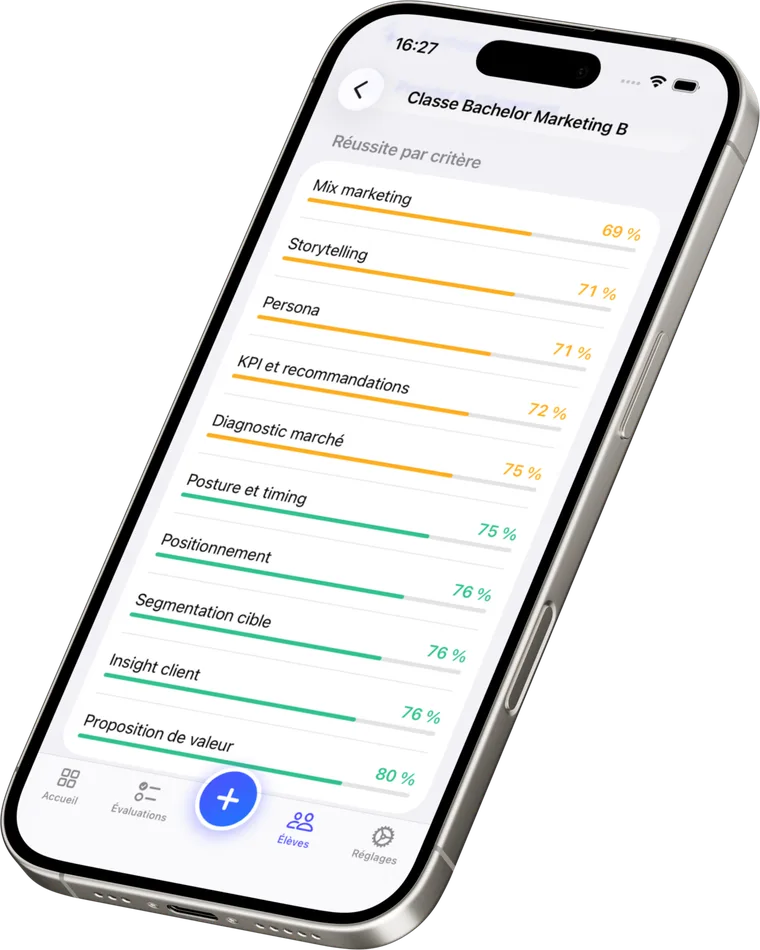
Prepare the rubric before the session, record brief observations during the presentation and leave the final wording for your review afterwards. Tissyo Jury lets you grade work, dictate observations and track progress in one place.
Reduce bias and make feedback actionable
Check whether your first impression is influencing every criterion, vary the order in which you review work or hear presentations where possible, and revisit unusual differences in scores. Finish with one strength, a specific example and a manageable next action.
Explore further
Continue with a guide to building an oral assessment rubric, planning mock oral exams, common sources of bias in oral assessment, and feedback that helps students improve.
Adapt assessment to the situation
Depending on your teaching context, explore these focused guides:
- organise speaking turns and listening during class presentations;
- separate group and individual criteria in a group presentation;
- help quieter students participate without putting them on the spot;
- assess body language without caricature;
- plan realistic mock oral exams;
- import and organise students before assessment;
- fit assessment into your plans for the school year.
Frequently asked questions
Does every criterion need a numerical score?
No. Formative assessment can use the same criteria without producing a numerical grade.
How should I assess a group presentation?
Distinguish shared aspects of the work from individual indicators, and explain their weighting before the presentation.
Based on Vincent Mary’s French guide for Tissyo. English version published on 13 September 2026.